









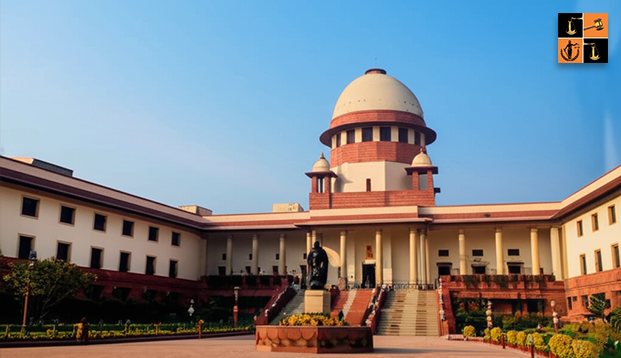
Today, the Supreme Court dealt a major blow to a suspended Punjab Police DIG accused in a CBI bribery case, refusing to grant bail and signalling a firm approach in cases involving senior public officials. The Bench of Chief Justice Surya Kant, Justice Joymalya Bagchi and Justice Vipul M. Pancholi highlighted a key concern that goes to the heart of such prosecutions, the real possibility of influencing witnesses, and stressed the need to safeguard the fairness of the trial as it unfolds.
The case centres on allegations that the officer, while serving in a senior position, demanded illegal gratification through an intermediary in exchange for favourable treatment in a criminal matter and protection from coercive action. Acting on a written complaint, the CBI conducted a discreet verification during which conversations between the complainant and the intermediary were recorded. A controlled call allegedly captured instructions linked to the collection of a substantial bribe amount. This was followed by a trap operation, where the intermediary was apprehended while accepting part of the alleged sum. The officer was subsequently arrested, and after completion of the investigation, both the primary and supplementary charge sheets were filed. Despite this, his bail plea was rejected first by the Special Court and later by the High Court, which cited apprehensions of witness influence and the gravity of the allegations.
Before the Supreme Court, the defence argued that the officer had been in custody for several months, was under suspension, and posed no flight risk. It was further contended that the case did not involve a direct trap against him and that the prosecution’s case rested on indirect allegations. However, the Bench remained unconvinced, noting that the matter involved serious corruption charges and that crucial witnesses were yet to be examined. Endorsing the concerns raised by the High Court, the Court observed that the petitioner’s past position within the police hierarchy could not be ignored at this stage, particularly when the possibility of influencing witnesses remained real. The Bench succinctly stated, “We are not inclined to entertain for bail at this stage,” while granting liberty to approach the High Court again if the trial does not commence within two months.
Consequently, the bail plea was rejected.
Source PTI
Picture Source :



















